


HARRISONBURG, Va. (CN) - A federal judge in Virginia ruled Tuesday that a school board's decision to restore the Confederate name of a high school violates Black students' First Amendment right against compelled speech.
The Barack Obama-appointed judge ruled the Shenandoah County school board's decision forced plaintiffs, who include members of the NAACP Virginia State Conference and parents of children attending Stonewall Jackson High School, to paint Confederate General Thomas Jonathan "Stonewall" Jackson in a positive light.
"Plaintiffs believe that when they are identified as 'Stonewall Jackson Generals' and wear 'Generals' team uniforms as they dedicate their hard work and athletic, academic and musical talents to performances and competition victories attributable to 'Stonewall Jackson High School,' plaintiffs themselves become instruments for communicating the school board's message," U.S. District Judge Michael Urbanski wrote.
Despite the favorable ruling, Urbanski denied the plaintiffs' request for a final judgment, which would have required the school board to rename the school for the third time in five years. Urbanski said he would reserve final judgment until after plaintiffs' other claims, including violations of the 14th Amendment's Equal Protection Clause, Title VI, and the Equal Educational Opportunities Act claims, are resolved.
"The court has concluded that D.D., A.J., and the other members of the Virginia State Conference NAACP who attend Stonewall Jackson High School are subject to ongoing violations of their constitutional rights, and the court recognizes the urgency of remedying those compelled speech violations as soon as possible," Urbanski wrote. "However, the court cannot enter final judgment at this time because the relationship between the adjudicated and unadjudicated claims, particularly the injunction component of the relief sought under all claims, calls for deferring entry of final judgment until the full scope of the injunctive relief required in this case can be conclusively established and implemented in a manner that ensures efficiency, certainty and fairness for both the school board and plaintiffs."
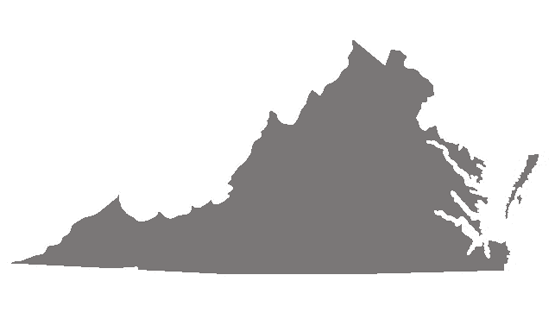
The ruling does not include claims pertaining to the school board's decision to reinstate the Confederate name of an elementary school. The school system, located in the northwestern area of Virginia, made national headlines in 2024 when it voted 5-1 to restore the Confederate namesakes of two schools. The renaming of Mountain View High School and Honey Run Elementary School to their prior names, Stonewall Jackson High School and Ashby-Lee Elementary School, respectively, is believed to be the first renaming of its kind.
In a 5-1 vote, the school system, like many in the South, agreed to retire the Confederate school's names in 2020 following a summer of civil unrest spurred by the police killing of George Floyd. Community members immediately began campaigning for school board seats on the promise of restoring the names.
The school board, represented by firm Guynn & Waddell, argued the school name and mascot aren't speech. They point to the school-sponsored speech doctrine, which permits educators to exercise editorial control over student speech if the action is related to a legitimate school concern.
"Neither the school-sponsored speech doctrine nor any other school speech doctrine justifies reducing First Amendment protection against compelled speech in this case because the school board has never cited any interests related to teaching or otherwise stemming from the needs of the school environment to justify the decision to reinstate the name 'Stonewall Jackson High School' and to thereby reintroduce references to 'Stonewall Jackson' into extracurricular activities," Urbanski wrote.
They also argued local school boards should dictate such matters rather than a federal court.
"Requiring the school board to change the names it selected for two schools, an explicit campaign promise of a majority of those elected, would be a violation of the school board's First Amendment right to select from among various viewpoints those that it wishes to express as its own," the school board wrote in its brief.
The school board quibbles with the plaintiffs' assertion that the Stonewall Jackson name conveys a message for First Amendment purposes.
"Unlike Fourth Circuit cases in which Confederate symbols or images were found to send a message of racial separation or oppression, the plaintiffs here only claim to be compelled to speak the school name, 'Stonewall Jackson High School,' and the mascot name, 'General,'" the school board wrote.
Urbanski and the plaintiffs counter that the context of the reinstatement indicates the board aimed to convey a message.
"In 2020, the school board expressed unambiguously and unanimously that it believed removing the name 'Stonewall Jackson High School' sent a message 'condemning racism,'" Urbanski wrote.
The school board's historical expert claimed during oral arguments that there is a factual dispute as to the true nature of Jackson's character and, therefore, as to whether his name conveys a clear message because Jackson both fought to preserve slavery and taught Black people to read in Sunday school.
Urbanski wrote that if the school board truly didn't mean to honor Jackson's legacy as a Confederate general, they could have named it Thomas Jonathan Jackson High School instead of using his nickname.
"Unrebutted evidence from plaintiffs' historical expert indicates that the nickname celebrates Jackson's military accomplishments on behalf of the Confederacy," Urbanski wrote. "Plaintiffs' expert explains that this nickname has allowed Jackson to function as a leading symbol of the 'Lost Cause' narrative."
The NAACP offered further context, emphasizing the names' origins as remnants of Massive Resistance. In 1958, in response to a federal court order requiring the integration of various schools in Virginia, Governor J. Lindsay Almond ordered schools in several counties to be closed to avoid integration. Eight years after Brown, Virginia schools remained 99% segregated.
In the 1950s, Shenandoah County received $500,000 from the General Assembly to build three high schools to serve white students. During the same period, the school system named an elementary school in honor of Stonewall Jackson. Black students were not permitted to enroll in Stonewall Jackson High School and were bused to high schools in Harrisonburg and Winchester. Following an effort by the NAACP, the first Black students enrolled in the school for the 1963-1964 school year.
Attorneys from Covington & Burling and the Washington Lawyers' Committee for Civil Rights and Urban Affairs, representing the plaintiffs, along with attorneys representing the school board, did not respond to requests for comment.
Source: Courthouse News Service